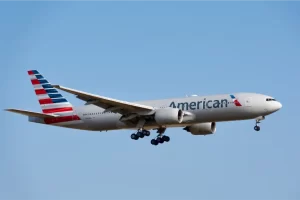
An alternate airport in aviation is not simply another place a flight could land if something goes wrong. In the regulatory sense, an alternate airport is a formally designated backup destination filed as part of an IFR flight plan — one that meets specific weather minimums, has an approved instrument approach procedure, and satisfies FAA fuel requirements before the flight ever leaves the ground. When weather at the intended destination drops below the minimums required to land safely, the alternate airport is the pre-planned answer to that problem. The planning happens on the ground before departure. The consequences of getting it wrong play out in the air.
Flight Briefing
- An alternate airport must be filed in an IFR flight plan when the forecast weather at the destination falls below specific minimums — in the US this is governed by the 1-2-3 rule, which requires an alternate when ceiling and visibility at the destination are forecast to be below 2,000 feet and 3 miles during a window one hour before to one hour after the estimated arrival time
- The alternate airport itself must meet its own weather minimums at the estimated time of arrival — filing an alternate that also has bad weather defeats the purpose entirely
- The alternate must have an approved instrument approach procedure that the aircraft is equipped to fly and the crew is qualified to execute
- Fuel requirements for IFR flight include enough to reach the destination, proceed to the alternate if necessary, and maintain required reserves — alternate planning and fuel planning are inseparable
- Part 91 and Part 121 regulations governing alternate airport requirements differ significantly — commercial airline operations under Part 121 carry stricter requirements than general aviation operations under Part 91
- Weather minimums at alternate airports are not the same as minimums at the destination — alternate minimums are typically higher, requiring better conditions, because the crew arriving at an alternate is already dealing with a disrupted situation and needs more margin
How it Works
Alternate airport planning begins during preflight, before a single engine starts. The pilot or dispatcher checks weather forecasts for both the destination and potential alternate airports, evaluating whether conditions at the estimated time of arrival will meet the regulatory thresholds that determine whether an alternate must be filed.
In the United States the trigger for filing an alternate under Part 91 is the 1-2-3 rule — if the destination airport’s forecast calls for a ceiling below 2,000 feet or visibility below 3 miles during the window from one hour before to one hour after the estimated arrival time, an alternate must be filed. Commercial operations under Part 121 apply their own more stringent standards governed by the airline’s operations specifications.
Once the determination is made that an alternate is required, the pilot selects an airport that satisfies three criteria. First, the alternate must have forecast weather at or above its published alternate minimums at the estimated time of arrival. Second, it must have an instrument approach procedure the aircraft can fly. Third, the aircraft must carry enough fuel to reach the destination, divert to the alternate if necessary, and still land with required reserves intact.
The alternate minimums themselves deserve attention. They are published separately from the approach minimums used for a normal landing attempt at that airport. Alternate minimums are typically higher — requiring better ceiling and visibility — because a crew diverting to an alternate is operating in a degraded situation. The regulatory framework builds in additional margin precisely because the circumstances that drive a diversion are already non-standard.
When weather at the destination deteriorates below minimums during the flight, the crew evaluates their options against their pre-planned alternate. ATC is informed, fuel state is checked against the alternate routing, and the decision to divert is made with the pre-planned alternate as the primary option. The value of thorough preflight planning is that this decision, made under pressure in a high workload environment, has already been largely worked out on the ground in a calm one.
From The Flight Deck
I was on the ground in San Diego waiting for an inbound flight carrying a human organ for transplant. A courier I work with was on that aircraft. The organ had a window. Organs always have a window.
Word came that the flight was in jeopardy. Fog had moved in and conditions at San Diego had dropped below the minimums required to land. There was real uncertainty on the ground about whether the flight would make it in or divert to another airport entirely. The people coordinating on the ground were working through it — back and forth, assessing, waiting for updates on whether conditions would improve enough for the crew to attempt the approach.
I don’t know what was happening in the cockpit or what the crew’s specific decision making process looked like from their side. I don’t know whether they were evaluating a filed alternate or working through other options. What I knew was that I was standing on the ground in San Diego with a hospital waiting on the other end of my delivery, and the flight that was supposed to bring me the organ might land somewhere else entirely.
After some tense back and forth among the coordinators on the ground, word came that the flight would attempt the landing. It came in late. The fog had lifted just enough. The organ made it.
That experience gave me a ground level understanding of why alternate airport planning exists that no regulatory document could replicate. Weather minimums are not bureaucratic thresholds. They are the line between a crew attempting an approach with adequate safety margin and a crew attempting one without it. When conditions drop below that line the answer is a diversion — a pre-planned one, with fuel already calculated and an airport already evaluated before departure.
The planning that keeps a flight from being trapped between a destination it can’t land at and nowhere else to go happens on the ground before takeoff. Standing in San Diego waiting on an organ while fog made that planning matter in real time made that fact very concrete.
Related Terms
- Related Term 1
- Related Term 2
- Related Term 3