In aviation, altitude is the vertical distance of an aircraft above a reference point — most commonly mean sea level. It is one of the most fundamental measurements in flight, governing everything from traffic separation and terrain clearance to engine performance, fuel efficiency, and passenger comfort. Every phase of flight — departure, climb, cruise, descent, and approach — is defined and managed in terms of altitude. Air traffic control assigns it, pilots monitor it continuously, and the entire structure of controlled airspace is built around it. In aviation, altitude is not just a number. It is the primary dimension in which flight operates.
Flight Briefing
- Aviation uses several distinct altitude definitions — indicated altitude is what the altimeter reads based on atmospheric pressure, true altitude is actual height above sea level, absolute altitude is height above the terrain directly below, and pressure altitude is height above the standard pressure datum of 29.92 inches of mercury
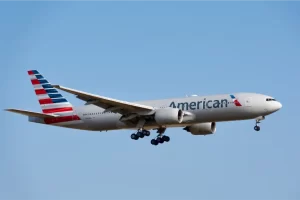
- Commercial aircraft typically cruise between 30,000 and 40,000 feet where thinner air reduces aerodynamic drag and improves fuel efficiency — the tradeoff is that engines produce less thrust in thinner air and aircraft must be traveling faster to generate sufficient lift
- Aircraft altimeters work by measuring atmospheric pressure, which decreases predictably as altitude increases — pilots set a local altimeter setting so their instrument reads accurate altitude relative to sea level at their location
- Above 18,000 feet in the United States all aircraft operating in Class A airspace set their altimeters to the standard pressure setting of 29.92 inches of mercury — this standardization ensures consistent altitude references across all aircraft operating at high altitude
- Cabin pressurization on commercial aircraft maintains an internal pressure equivalent to roughly 6,000 to 8,000 feet even when cruising at 35,000 feet — this reduces physiological stress on passengers and crew but doesn’t eliminate it entirely
- Terrain clearance is one of the most safety critical applications of altitude measurement — minimum safe altitudes, published instrument approach procedures, and terrain awareness warning systems all exist to ensure aircraft maintain safe vertical separation from the ground
How it Works
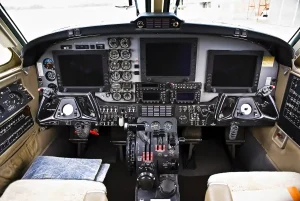
The altimeter is the primary instrument for measuring altitude in flight. It works on a straightforward principle — atmospheric pressure decreases at a predictable rate as altitude increases, and the altimeter translates that pressure reading into a displayed altitude in feet. The pilot sets a local altimeter setting, obtained from air traffic control or an automated weather source, which calibrates the instrument to read accurate altitude above sea level for the current atmospheric conditions in that area.
At lower altitudes where local pressure variations matter, each airport and region has its own altimeter setting that pilots update as they fly. Above 18,000 feet the FAA requires all aircraft to set the standard pressure datum — 29.92 inches of mercury — creating a uniform reference across all high altitude traffic regardless of local conditions. This standardization is what allows air traffic control to assign and maintain precise vertical separation between aircraft cruising at different flight levels.
Altitude affects aircraft performance in ways that require continuous management. As an aircraft climbs, the air becomes thinner — lower pressure, lower density, lower oxygen content. Engines produce less thrust because there is less air mass flowing through them. Wings generate less lift because the air they’re moving through is less dense. Aircraft must fly faster indicated airspeeds at altitude to generate equivalent lift, and engines must be managed carefully to deliver the required thrust within their operational limits.
Cruise altitude selection balances several competing factors. Higher altitudes generally offer better fuel efficiency because reduced air density means less drag — but only up to the point where the aircraft can maintain sufficient speed and the engines can produce adequate thrust. Weather systems, turbulence layers, and airspace constraints also influence altitude selection. On long haul flights, as fuel burns off and the aircraft becomes lighter, crews often request higher altitudes in a step climb sequence — ascending in increments as the aircraft’s reduced weight allows it to maintain efficient cruise at progressively higher levels.
Cabin pressurization exists because the human body cannot function normally at the altitudes where commercial aircraft cruise. At 35,000 feet the ambient air contains roughly a quarter of the oxygen available at sea level — unbreathable without supplemental oxygen. Pressurization systems pump conditioned air into the fuselage and maintain an internal pressure equivalent to a much lower altitude, typically 6,000 to 8,000 feet. This keeps passengers and crew comfortable and functional, but the lower oxygen environment compared to sea level still has measurable physiological effects over time.
From The Flight Deck
You stop noticing the altitude after enough flights. Somewhere in the first hour of cruise, whatever awareness you had of being six or seven miles above the earth fades into the background hum of the cabin. The speed disappears too — at 500 miles per hour over the North Atlantic there’s nothing outside the window moving fast enough to register as speed. Just a faint curvature on the horizon if the sky is clear and an ocean of cloud below if it isn’t.
What doesn’t disappear, at least not entirely, is what the altitude does to you physically.
The ear pressure during descent is the most immediate one — that building discomfort as the cabin repressurizes and the Eustachian tubes struggle to equalize. On short flights it’s a minor inconvenience. On back to back long haul flights it accumulates. Dehydration is the other constant companion at altitude — the cabin air is extremely dry and the pressurized environment accelerates fluid loss in ways that catch up with you hours into a flight if you’re not deliberate about it. The fatigue that comes with long high altitude cruises isn’t just jet lag. It’s the cumulative effect of hours in a low humidity, slightly low oxygen environment on a body that would prefer otherwise. As I’ve gotten older I’ve noticed stiffness in my hands after long flights — something I’ve come to understand is at least partly altitude related, a circulation and pressure response that wasn’t as noticeable in my earlier years of flying.
The moment altitude becomes most visceral is a rapid descent. I’ve been on several flights where significant turbulence forced the crew to descend quickly — the kind of descent where you feel it in your stomach and the cabin goes quiet in that particular way that means everyone just gripped their armrests at the same time. What I noticed after those descents, once things had stabilized, was the sound of the engines spooling up noticeably. Sometimes the crew would descend to get below the turbulence, then climb back up once they were through it — the goal always being to get back to the highest safe cruise altitude where the aircraft runs most efficiently. The thrust increase makes sense in that context. Getting back up requires power, and the denser air at lower altitude creates more drag to push through on the way.
Altitude is invisible until it isn’t. Then it’s the only thing in the room.
Related Terms
- Related Term 1
- Related Term 2
- Related Term 3