The Federal Aviation Administration, known universally as the FAA, is the U.S. federal agency responsible for regulating and overseeing all aspects of civil aviation in the United States and surrounding international waters. Its authority covers air traffic control, aircraft and personnel certification, airport standards, and the safety of the National Airspace System. Created in 1958, the FAA is the primary reason American commercial aviation operates with the safety record it does — and when the FAA moves, the entire aviation industry moves with it.
Flight Briefing
- The FAA was established in August 1958 as the Federal Aviation Agency, replacing the Civil Aeronautics Administration, and became the Federal Aviation Administration in 1967 when it was folded into the newly created Department of Transportation
- The FAA is the sole provider of en-route air traffic management services in the United States, overseeing the most complex airspace system in the world
- Core responsibilities include aircraft and personnel certification, air traffic control operations, airport safety standards, and enforcement of federal aviation regulations
- The FAA and EASA — the European Union Aviation Safety Agency — are the two primary aircraft certification authorities globally, and their approvals are the standard the rest of the world references
- The FAA oversees commercial space transportation in addition to traditional aviation, reflecting the expanding definition of what operates in U.S. airspace
- When the FAA issues an emergency airworthiness directive or grounds an aircraft type, the downstream effects ripple immediately through airlines, maintenance facilities, parts suppliers, and the entire aviation supply chain
How it Works
The FAA operates through two primary divisions that handle its core mission. The Air Traffic Organization manages the National Airspace System — the infrastructure of towers, en-route centers, navigation aids, and procedures that move roughly 45,000 flights through U.S. airspace on a typical day. The Aviation Safety Organization handles certification, inspection, and enforcement — everything from approving a new aircraft design to licensing a student pilot to inspecting a maintenance facility.
Aircraft certification is one of the FAA’s most consequential functions. Before any aircraft type can carry passengers commercially in the United States it must receive FAA type certification — a process that involves reviewing design data, conducting flight tests, and verifying that the aircraft meets every applicable safety standard. Components installed on certified aircraft must themselves meet FAA standards, documented through airworthiness approval tags and manufacturer certifications that follow the parts through the supply chain.
When safety issues emerge in service the FAA responds through Airworthiness Directives — mandatory corrective actions that operators must comply with within specified timeframes. ADs can require inspections, modifications, or in serious cases the grounding of entire aircraft fleets. The speed and specificity of FAA response to an emerging safety issue directly determines how quickly the industry can identify the problem, source the necessary parts, and return aircraft to service.
The FAA also sets the regulatory framework for international operations through participation in the International Civil Aviation Organization and bilateral agreements with other national aviation authorities. FAA certification carries significant weight globally — many countries accept FAA approved aircraft and components under these agreements, making FAA standards effectively international in reach.
From The Flight Deck
In January 2024 an Alaska Airlines Boeing 737 MAX 9 suffered a door plug blowout at altitude on Flight 1282. Nobody died but the incident was serious enough that the FAA grounded the entire MAX 9 fleet immediately and ordered emergency inspections across every operator. What followed in maintenance facilities across the country was exactly the kind of organized chaos that a sudden regulatory crisis produces.
A few weeks after the incident I got a job that took me from the Scottsdale area up into the mountains to Prescott, Arizona — home of Embry Riddle Aeronautical University and a quiet but significant aerospace presence. The pickup location was an unmarked warehouse. The shipment was a box of door plates and associated hardware. There was no invoice, no documentation. The contact at the warehouse told me that was intentional — just deliver it, they know it’s coming, they’ll accept it.
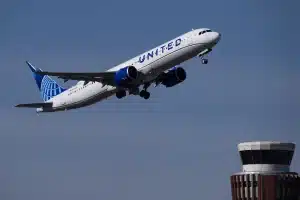
I asked the one question that mattered in that situation. Will United’s maintenance facility in Palm Springs accept this without paperwork? Yes. Then the job is to deliver it.
When I arrived in Palm Springs the United maintenance team accepted the box — and then told me they already had the parts. Someone in the chain, amid the scramble of emergency FAA directives and simultaneous orders flying across multiple maintenance operations, had placed duplicate orders. A maintenance supervisor muttered something about the FAA providing information that led to the confusion — whether that was a miscommunication in the directive itself or in how it was interpreted and acted on I couldn’t say. What I can say is that whoever initiated that courier run paid a significant amount of money to move hardware that was already at the destination.
That’s what a regulatory crisis looks like from the ground level. The FAA grounds a fleet, maintenance facilities scramble to source parts and comply with directives simultaneously, communication breaks down under pressure, and the supply chain absorbs the cost in duplicate orders, wasted logistics, and couriers driving unmarked boxes through mountain roads to Palm Springs for nothing. The system worked — the MAX 9 fleet was inspected and returned to service. But the friction of getting there was real, and I had a front row seat to a small piece of it.
Related Terms
- Related Term 1
- Related Term 2
- Related Term 3