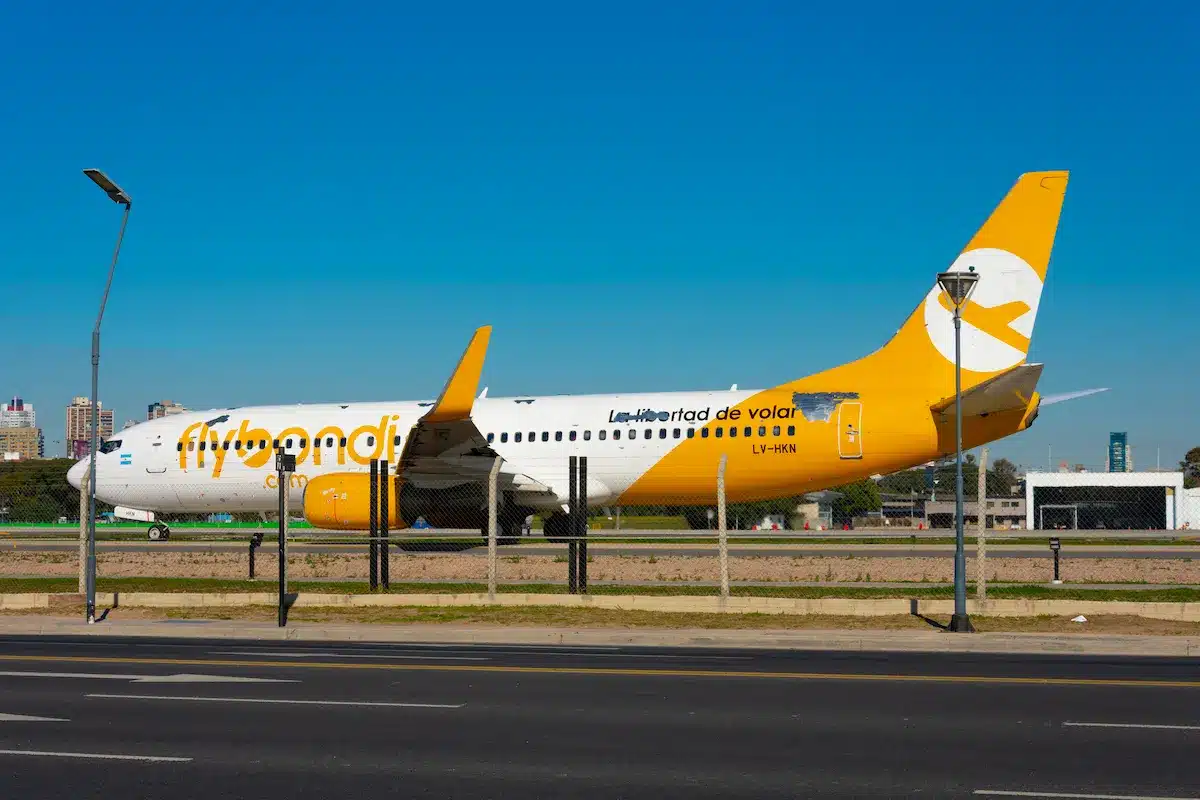
Flybondi, the airline that opened up air travel to millions of Argentines who previously relied on long-distance buses, has collapsed to a single operating aircraft after a stunning unraveling that unfolded in a matter of months.
The scale of the reversal is hard to overstate. As recently as late last year, the U.S.-backed carrier was announcing plans to order up to 35 Airbus and Boeing jets and grow its fleet by more than 200%. Today, flight-tracking data shows one plane flying its remaining routes. A second may return after maintenance.
The collapse traces to a familiar pattern: maintenance backlogs, missed payments on leasing contracts, and a scheduling strategy that sold more seats than the fleet could realistically fly — generating short-term cash while destroying passenger trust. Two aircraft sent to Mexico for overhaul couldn’t return because of unpaid bills. A wet-lease deal supplying extra planes ended at the worst possible moment. The CEO resigned after only months in the role.
Flybondi had held roughly a quarter of Argentina’s domestic market. That share has fallen to single digits as rivals — including the state carrier and a Chilean-owned low-cost competitor — absorbed the passengers it could no longer carry.
Why It Matters: Flybondi was the flagship test of Argentina’s open-skies experiment, meant to prove private capital could compete with a state-subsidized national carrier. Its near-collapse doesn’t just hurt Argentine travelers — it raises hard questions about whether any private airline can navigate the country’s restrictions on moving money abroad to pay foreign suppliers and lessors.
Source: The Rio Times