Airbus CEO Guillaume Faury has a message for Boeing, and he delivered it with characteristic European restraint: “Perfect.”
That was his response when told that Boeing CEO Kelly Ortberg suggested his company’s next narrowbody timeline may slip because he doesn’t yet see sufficient demand. Faury wasn’t being dismissive. He was being strategic. Airbus is moving forward with the A320 successor — internally called eAction — with a formal program launch targeted for 2030 and entry into service in the second half of the 2030s. And Faury is perfectly comfortable being first.
“We don’t want others to do what we are best placed to do,” Faury told Aviation Week. “If we move first, the supply chain will come to us. We want to be mastering the time. You don’t want to do this reacting to something else.”
Replacing the Most Successful Narrowbody Ever Built
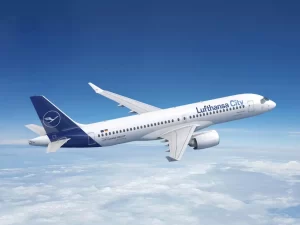
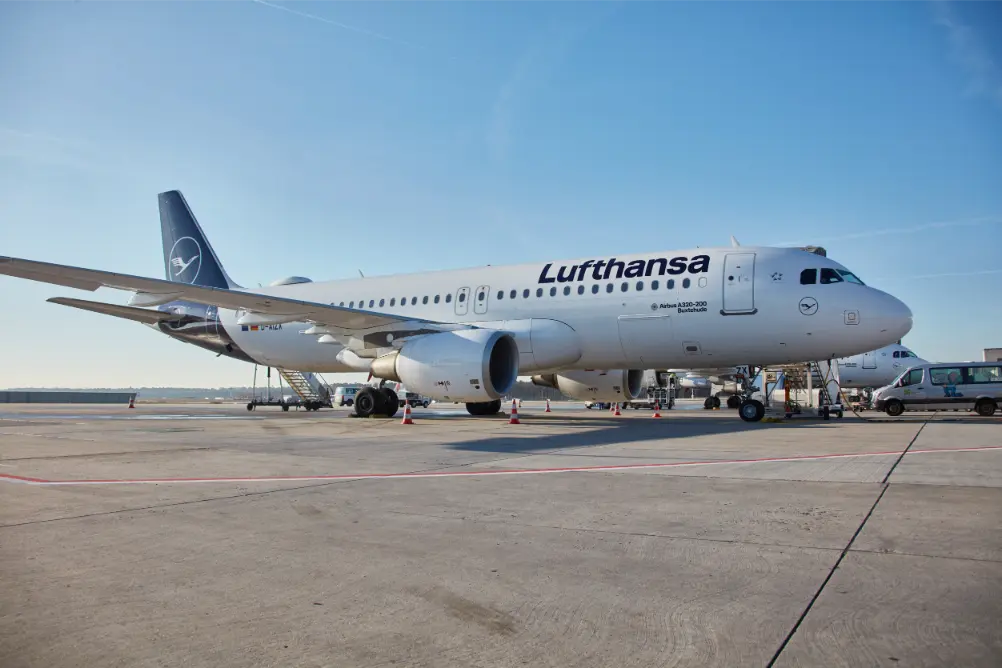
The scale of what Airbus is attempting is worth sitting with for a moment. The A320 family has accumulated over 20,000 orders, with more than 11,000 aircraft currently in service worldwide and a backlog of nearly 7,500 jets still to be delivered. The A321neo alone has a backlog of over 5,600 aircraft. Airbus is currently building A320 family jets at 60 per month and targeting 75 per month by end of 2027.
In other words, Airbus is preparing to replace a product that isn’t broken, isn’t slow-selling, and won’t stop being relevant for decades. Faury acknowledged as much: “The A320 will probably remain very popular for a long time. We will have to be flexible in the overlap and the speed of ramp down and ramp up of the two products.”
The parallel production period — running eAction alongside the A320neo family — is essentially certain. It mirrors what happened when the A320neo replaced the A320ceo, though this time the new aircraft will be a clean-sheet design rather than a re-engined variant.
What eAction Actually Is
The specifics are still being worked through, but the direction is clear. Airbus is targeting a 20-30% improvement in fuel efficiency over current-generation aircraft, compatibility with 100% sustainable aviation fuel, and potential use of open-fan propulsion — a engine architecture that looks more like a turboprop than a traditional jet engine and offers significant efficiency gains.
Wing design is another open question. Longer wings deliver better aerodynamics, but single-aisle aircraft operate from crowded short-haul gates with tight spacing. Foldable wingtips — already used on Boeing’s 777X — are one option under consideration.
On engines, Faury said Airbus would “notionally prefer” two engine options but won’t rule out a single-source model if the performance case is strong enough. The current A320neo family offers both CFM’s LEAP-1A and Pratt & Whitney’s GTF engine — a dual-source model that has created its own headaches as PW engine issues grounded hundreds of aircraft over the past two years.
The Supply Chain Lesson
Faury was candid about the supply chain fragmentation that has plagued Airbus in recent years. The eAction program is being designed from the ground up to reduce single points of failure, diversify suppliers geographically, and build more resilience into the industrial system than the A320 program currently has.
“We are trying to get rid of single points of failure, derisking, diversifying the supply chain more than we did in the past — mostly because of geopolitical risks, but not only,” Faury said. “That is most likely something we will take into account from Day 1.”
Why It Matters: The aircraft Airbus launches in 2030 will be flying passengers in 2040 and beyond — shaping what narrowbody flying looks, feels, and costs for the next generation of travelers. If Airbus moves first and Boeing is forced to respond, the competition between their next-generation narrowbodies will ultimately determine fares, cabin products, and route economics for decades. The eAction program is the most consequential aircraft development story in aviation right now.
Source: Airbus Is “Very Committed” to Launching an A320 Family Replacement in 2030, CEO Says